All Posts By

CCFPeace

More Than 125 Entertainment Professionals Sign Open Letter Urging Peace in Middle East

By: Malina Saval

As tensions continue to flare in the Middle East, Creative Community for Peace,  an apolitical, non-profit entertainment industry organization, has come together to issue a collective call for “peace, balanced discourse and an end to inflammatory one-sided accounts” of the conflict between Israel and Palestinian Territories. This divisive rhetoric, notes the org, serves only to foment an already incendiary crisis that has, this past week alone, claimed more than 200 lives.

Creative Community for Peace was founded in 2012 by David Renzer, former chairman/CEO of Universal Music Publishing, and Steve Schnur, worldwide executive & Music President, Electronic Arts.

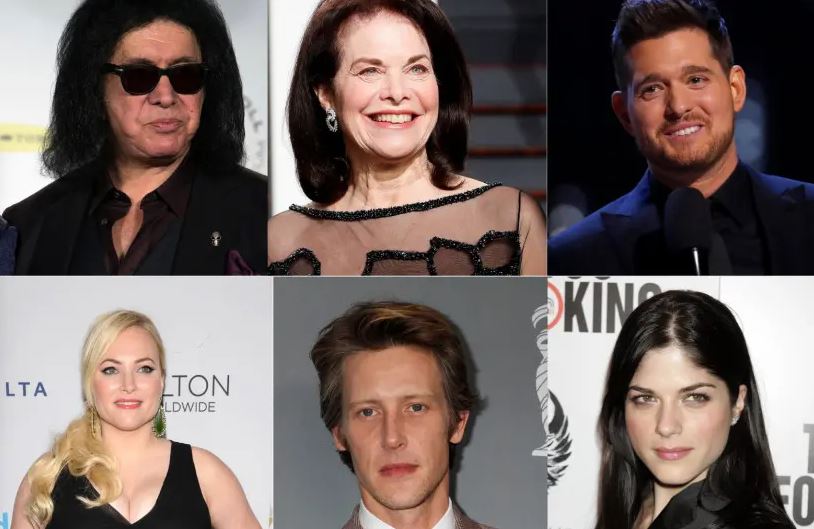
More than 125 leaders in the entertainment industry,  including KISS  frontman Gene Simmons, Grammy Award-winning artist Michael Bublé, Haim Saban, chairman & CEO, Saban Capital Group, and songwriter-producer Diane Warren, signed the Creative Community for Peace-endorsed open letter, which urges peace in the Middle East and implores fellow members of the entertainment industry to use their celebrity platforms to encourage productive, fact-based discourse, with peace as the main objective. The open letter also acknowledges the pain and loss impacting all parties involved in the conflict.

“I pray for peace,” says Saban, who was born in Alexandria, Egypt and moved with his family to Tel Aviv, Israel when he was 12.

“There has to be a way to sit down and talk through differences,” says Simmons, who was born in Haifa, in northern Israel, and emigrated with his family to the States at the age of eight.

“I pray for peace. For all.”

The joint statement from the Creative Community for Peace comes amid a surge of violence in Israel and the Palestinian Territories, including indiscriminate rocket attacks targeting metropolitan areas throughout Israel, as well as Israel’s retaliatory response in Gaza. Hamas, a militant Palestinian Islamic organization that has controlled the Gaza Strip since Israel unilaterally withdrew from the territory in 2005, has launched more than 2,000 rockets into Israel, including Islamic holy sites in Jerusalem. On May 15, an Israeli air raid flattened a 12-story tower that served as a Hamas stronghold. The building, located in Gaza City, also housed offices belonging to Qatar-based broadcaster Al Jazeera and the U.S.-based Associated Press.

Friction between Israel and Palestine has also mounted over an Israeli court order to evict Palestinian residents from the neighborhood of Sheik Jarrah in East Jerusalem. That order is currently awaiting an appeal in Israel’s Supreme Court.

A flurry of anti-Israel memes and posts have since erupted on Twitter, Facebook and Instagram, with Israeli actor Gal Gadot skewered on social media after posting a statement calling for peace.

“My heart breaks. My country is at war,” Gadot posted on Twitter. “I worry for my family, my friends. I worry for my people. This is a vicious cycle that has been going on for far too long. Israel deserves to live as a free and safe nation. Our neighbors deserve the same. I pray for the victims and their families, I pray for this unimaginable hostility to end, I pray for our leaders to find the solution so we could live side by side in peace. I pray for better days.”

Gabriella Geisinger, Deputy Movies Editor at Digital Spy, called Gadot’s post “harmful.” Writer and activist Aaron Vallely commented that “Gal Gadot’s statement is far worse than that tone-deaf ‘Imagine’ video from last year.”

This vitriol, says Ari Ingel, an entertainment attorney and director of Creative Community for Peace, serves only to “increase the animosity and hatred, which unfortunately, has real life consequences.”

“Misinformation that is being spread online and then amplified by social media influencers, influencers with no real knowledge of what is happening, is only working to inflame the situation, instead of working to de-escalate it and work through some sort of resolution to the situation,” Ingel continues. “The misleading and fallacious memes that are being posted from people that have no real concept of what is happening there and are not experts on the conflict are just making a horrible situation far worse.”

The open letter, notes Ingel, is also to inform the public that “Hamas is playing a leading role in this violence.”

“While we may have differing views on whether the evictions are legitimate or not legitimate, that doesn’t take away from Hamas firing these missiles indiscriminately at civilian populations in Israel, which affects Arabs and Jews,” says Ingel. “People need to call on [Hamas] to stop firing missiles and stop inflaming the situation.”

Along with Gadot, Ingel also highlights entertainment figures such as Rihanna, who wrote on her Instagram page that she “stand[s] with humanity,” and DJ Khaled, who issued a call for “love and light and prayers.”

“I think we need to elevate the voices of people like Rihanna, who are calling for an end to the violence and not choosing sides,” says Ingel. “That is really what entertainers should be doing. Because it’s horrible that both Israelis and Palestinians are suffering. We need to de-escalate this violence as soon as possible.”

The Creative Community for Peace open letter is as follows:

“We are deeply concerned by the escalating violence in Israel and the Palestinian Territories. The loss of life and violence is heartbreaking. We call on the leaders of all parties to end the violence, urge calm, and work toward de-escalation.

“We also call on our colleagues and friends in the entertainment community to stop posting misinformation and one-sided narratives that only work to inflame the conflict instead of bringing about peace.

“While we may have differing opinions on the conflict, it is never okay for Hamas to publicly call for the killing of civilians, use civilians as human shields, and rain down missiles indiscriminately on civilian populations with no care about who is killed—Arab or Jew.

“When lives are at stake, we all bear responsibility to unite rather than divide. Incendiary language only benefits those at the extremes who have no interest in peace. Our thoughts are with all Israelis and Palestinians who are experiencing unfathomable levels of fear and violence, and hope for the day when both peoples can live side by side in peace.” 

The signatories to the open letter include: Gene Simmons; Meghan McCain (co-host, “The View”); Haim Saban;  Sherry Lansing (former CEO of Paramount Pictures); Orly Agai Marley (president, Tuff Gong Worldwide); David Draiman (frontman, Disturbed); Noa Tishby (author, producer, actor); Selma Blair; Michael Buble; Diane Warren; Ben Silverman (chairman and co-chief executive officer of Propagate Content); Steve Schnur; Michael Rotenberg (partner, 3 Arts Entertainment); Mitchell Gossett (Industry Entertainment Partners); Andrew Gould (EVP Music Publishing, Roc Nation); Emmanuelle Chriqui (actress, activist); David Byrnes (partner at Ziffren, Brittenham, LLP); eve Barlow (music journalist); Aton Ben-Horin (global vice president of A&R for Warner Music Group); Kosha Dillz (artist, rapper); Amanda Kogan (agent, The Gersh Agency); David Renzer; Traci Szymanski (president, Co-Star Entertainment); Matisyahu (musician); Adam Taylor (president, APM Music); and Jordan Frazes (founder FRAZES CREATIVE).

A complete list of signatories can be found here: https://www.creativecommunityforpeace.com/blog/2021/05/14/open-letter-on-the-middle-east-situation/
Read the original article here.

Over 130 celebs call on influencers to stop Gaza violence misinformation

“We call on our colleagues & friends in the entertainment community to stop posting misinformation & one-sided narratives that only work to inflame the conflict instead of bringing about peace.”

By SARAH CHEMLA MAY 18, 2021 13:50

As tensions in the Middle East continue after more than a week of escalating violence, more than 130 leaders from the entertainment industry gathered by the organization Creative Community for Peace signed an open letter calling for “peace, balanced discourse and an end to inflammatory one-sided accounts” of the conflict between Israel and the Palestinian territories.
Creative Community for Peace (CCFP), an apolitical, non-profit entertainment industry organization, was founded in 2012 by David Renzer, former chairman and CEO of Universal Music Publishing, and Steve Schnur, worldwide executive & music president, Electronic Arts.
The first-of-its-kind open letter calling for peace urged entertainment community leaders to use their voice, influence and platforms to “call for the de-escalation of violence and the end to divisive rhetoric while also acknowledging the pain and loss impacting all parties involved in the conflict.”
This divisive rhetoric, stated the organization, serves only to foment an already incendiary crisis that has, this past week alone, claimed more than 200 lives.
The joint statement was signed by Michael Bublé, Sherry Lansing, Gene Simmons, Meghan McCain, Selma Blair, Emmanuelle Chriqui, Haim Saban, Diane Warren, Orly Agai Marley, David Draiman, Ben Silverman and Matisyahu, among many others. The open letter was made public on Friday.
“I pray for peace,” said Saban, who was born in Alexandria, Egypt, and moved with his family to Tel Aviv when he was 12.
“There has to be a way to sit down and talk through differences,” said Simmons, who was born in Haifa, in northern Israel, and emigrated with his family to the states at the age of eight. “I pray for peace. For all.”
“We are deeply concerned by the escalating violence in Israel and the Palestinian Territories,” the letter read. “The loss of life and violence is heartbreaking. We call on the leaders of all parties to end the violence, urge calm, and work toward de-escalation.”
“WE ALSO call on our colleagues and friends in the entertainment community to stop posting misinformation and one-sided narratives that only work to inflame the conflict instead of bringing about peace,” the statement continued.

“Misinformation that is being spread online and then amplified by social media influencers, influencers with no real knowledge of what is happening, is only working to inflame the situation, instead of working to de-escalate it and work through some sort of resolution to the situation,” CCFP director Ari Ingel said.

“The misleading and fallacious memes that are being posted from people that have no real concept of what is happening there and are not experts on the conflict are just making a horrible situation far worse,” he said.

“The open letter is also to inform the public that Hamas is playing a leading role in this violence,” Ingel said.

“While we may have differing views on whether the evictions are legitimate or not legitimate, that doesn’t take away from Hamas firing these missiles indiscriminately at civilian populations in Israel, which affects Arabs and Jews,” the director said. “People need to call on [Hamas] to stop firing missiles and stop inflaming the situation.”

Last Wednesday, Gal Gadot released a carefully worded statement on her social media accounts decrying the war and violence, using rather generic language and not assigning blame. However, her words ignited a backlash and she disabled comments on her Instagram and Twitter accounts.

Her statement read: “My heart breaks. My country is at war. I worry for my family, my friends. I worry for my people. This is a vicious cycle that has been going on for far too long. Israel deserves to live as a free, safe nation. Our neighbors deserve the same. I pray for the victims and their families, I pray for this unimaginable hostility to end, I pray for our leaders to find the solution so we could live side by side in peace. I pray for better days.”

Her words received a great deal of attention. The Pnai Plus entertainment website headlined an article about the controversy: “‘Wonder Woman wake up!’ How Gal Gadot became a public enemy,” among many others who criticized the superstar.
Hannah Brown contributed to this report.
Read the original article here.

NEW INITIATIVE FROM CREATIVE COMMUNITY FOR PEACE Helps Tackle Anti-Semitic Content on Entertainment Platforms

Digital services like TikTok, Spotify, SoundCloud and YouTube must continue to work to safeguard their sites, given the role they play in shaping young minds and influencing public opinion.

By Ari Ingel & Karys R. Oschin


In this time of social distancing and sheltering-in-place, people all over the world are spending more time on streaming sites than ever before. However, as users go digging for content to fill their time, they are also coming across an increasing amount of antisemitic content. Unfortunately, streaming services such as TikTok, Facebook, Spotify, and YouTube are struggling to implement and adequately enforce their own incitement policies on hate speech and violence.

In response to this, Creative Community for Peace has created a new Digital Taskforce to tackle this problem. We have been working with the Trust and Safety or Security Departments at these companies and have been directly responsible for removing hundreds of antisemitic videos, songs, and playlists, in addition to having an active ongoing dialogue resulting in new procedures and initiatives by these services as well.

TikTok, the explosively popular video-sharing social networking app geared towards children and teenagers, is the latest in a string of online platforms that have recently been found to be hosting troves of antisemitic content. The app, which allows users to upload minute-long videos to share with their friends, has also been hosting videos that encourage violence against Jews.

Examples of the antisemitic content on TikTok include a video that praised Middle East culture for creating “dread for the Jews” and “blows and slaughter on land and sea.” There was also an animated re-enactment of a series of four real-life terrorist attacks against Israelis. The clips included a 2015 stabbing that left two Israeli civilians dead and two injured, including a 2-year-old child, and a 2016 drive-by shooting that killed two. This graphic video depicted bullet wounds, knives slicing throats of religious Jews, and pedestrians run over by cars careening through the air.

Both of these videos have now been removed, along with hundreds of others that included anti-Jewish jokes, genocidal threats, and dehumanizing characterizations of Jews from across the political and religious spectrum, and throughout the world.

Similarly, Spotify was recently found to have many user-generated playlists that praised Hitler, called for the gassing of Jews, denial of the Holocaust, and featured profile photos of swastikas and Hitler. Examples of some of the offending playlists included: “Gas the Jews,” “Anne Frank Bash 2012 (Ima Jew),” “Anne Frank’s Gassing Up,” “Hitler’s Sexy Mixtape,” and “Hitler Did Nothing Wrong.” Many of these playlists are accompanied by odious images that mock Holocaust victims and push classic Jewish conspiracy theories.

Thankfully, Spotify has displayed an openness and eagerness to learn more about this problem and has been proactive about working with us. We have reported over 250 playlists with hateful titles or imagery in the last six months, and nearly all have been taken down.

One of the most challenging platforms to police is YouTube, which operates under the protection of the Digital Millennium Copyright act. This act effectively places the responsibility of policing on the users, who must notify YouTube of hate speech or copyright-infringing materials. Recently, copyright holders have made an effort to amend this law, with the feeling that YouTube should take more responsibility for problematic content.

However, despite a June 2019 YouTube policy that updated hate speech prohibitions to include ideologies such as White Supremacy and Holocaust denial, recently a report detailed over twenty-one hate-filled channels on You Tube.

YouTube, and other digital streaming sites, such as SoundCloud, also host dozens of antisemitic artists, songs, and playlists, particularly within the National Socialist Black Metal (NSBM) genre. This inflammatory genre pushes classic Neo-Nazi propaganda and Jewish conspiracy theories. We have worked with both sites to remove this hateful material.

CCFP was also responsible for YouTube’s removal of Louis Farrakhan’s Fourth of July Criterion speech from the Nation of Islam YouTube channel that was littered with outrageously antisemitic statements, and we helped pull the plug on a recent live webinar featuring PFLP terrorist and convicted plane hijacker, Leila Khaled.

Walking the line between hate speech and censorship is never easy. However, the glorification of terror, encouraging violence, and promoting antisemitism are clearly in violation of TikTok, Spotify, SoundCloud, and YouTube’s community standards. Given these platforms’ reach, these digital services have to continue to work hard to safeguard their sites, given the role they play in shaping young minds and influencing public opinion.


Read the article on JNS.org here.

X