Category

Article

Anti-Jewish Bias Is Spreading in Arts and Culture

Hadassah Magazine

There is little doubt that antisemitism in America has intensified recently. In the world of arts and culture, it may be more subtle than a scrawled swastika or a torched synagogue, but anti-Jewish bias in that realm is nonetheless a growing phenomenon.

This bias plays out in multiple ways, according to those looking at culture through a Jewish lens. One of the most recognizable is the marginalization—even demonization—of Israel, with Israeli narratives and artists who perform in Israel targeted by cultural boycotts. At the same time, debate persists among academics and media industry professionals about the degree to which Jews and Jewish stories are excluded from current diversity conversations.

Controversies around Israel “happen every year,” observed Shayna Weiss, the associate director of Brandeis University’s Schusterman Center for Israel Studies and a scholar of Jews in popular culture. “I think we see it more now because it’s easier to find these things online.”

Photo from ‘Happier Than Ever,’ Mason Poole/Disney.

A prime example is the anti-Israel Boycott, Divestment and Sanctions movement (BDS), in whose name pro-Palestinian activists have bullied entertainers who perform in Israel for years. Yet today, we watch the back-and-forth in real time on social media platforms that weren’t as popular, or weren’t around, back when the movement first emerged in the early 2000s. Announcements of a November concert in Israel by will.i.am of the Black Eyed Peas were met with instant boycott calls on Facebook and Twitter. And last July, singer/songwriter Billie Eilish’s Instagram account was targeted by antisemitic trolls after she promoted the launch in Israel of her album Happier Than Ever.

Social media has amplified other recent dustups, including popular Irish author Sally Rooney’s refusal to allow an Israeli publisher to translate her latest novel, Beautiful World, Where Are You, into Hebrew; comedian Sarah Silverman calling out “Jewface,” a neologism to describe non-Jewish actors playing Jewish roles, in a September podcast; and in spring 2021, the Society of Children’s Book Writers and Illustrators issuing, and then apologizing for, a statement that condemned antisemitism.

The entertainment community for the most part is very liberal. And on the left, unfortunately, if you support Israel, you’re being pushed out of those spaces,” said Ari Ingel, director of Creative Community for Peace, a nonprofit arts industry group that combats antisemitism, specifically the cultural boycott of Israel.

Ingel is among those who bemoan a progressive tendency to critique Israel’s complex, multicultural society in terms of America’s charged racial paradigm—“white oppressors, brown victims,” he said, with Israeli Jews cast as the oppressors. “It has been lumped into: If you’re a Zionist, that means you’re a colonizer. When you have Israel labeled a genocidal state and 90 percent of Jews in America support Israel, then all of a sudden Jews support genocide.” At a time when racial issues dominate American discourse, this perception has led to the increase in anti-Jewish sentiment.

On her podcast, Sarah Silverman discussed issues around ‘Jewface,’ when non-Jews are cast as Jewish characters, such as Rachel Brosnahan as Midge Maisel and Tony Shalhoub and Marin Hinkle as Midge’s parents in ‘The Marvelous Mrs. Maisel.’ Photo courtesy of Kast Media.

“We’ve seen these views emanate online from influencers in the entertainment community,” Ingel added. In 2020, rapper Ice Cube tweeted antisemitic images of a mural with large-nosed men playing Monopoly on the backs of Black people. The same year, Nick Cannon, host of the reality competition show The Masked Singer, shared classic antisemitic conspiracy theories on his podcast, asking why “we give so much power to the ‘theys,’ and ‘theys’ turn into Illuminati, the Zionists, the Rothschilds.”

In response, ViacomCBS canceled Cannon’s improv comedy television show, Wild N’ Out. The entertainer apologized and engaged in dialogue with the Jewish community. His show is now back on the air.

Ingel said his organization provides “balance” to what is often a strongly anti-Jewish discourse, supporting entertainers and sports figures who work in Israel. Last October, the group published an open letter protesting a boycott of TLVFest, the annual Tel Aviv International LGBTQ+ Film Festival. The 200 entertainment industry signatories included actors Neil Patrick Harris, Billy Porter and Helen Mirren (who, for her upcoming film role as Israeli prime minister Golda Meir, has been showered with antisemitic hate online). And nearly 50,000 artists have signed the group’s online petition against the cultural boycott of Israel since 2012, when Creative Community for Peace was founded by David Renzer, then CEO of Universal Music Publishing Group, and Steve Schnur, who heads the music division of Electronic Arts, the world’s largest video game company.

Courtesy of TLVfest.

Such high-profile signatories “demonstrate to the public that there’s still broad-based support for understanding and dialogue,” Ingel noted. “Where politics can be so divisive, arts, sports and music can really bring people together.”

Some observers like Weiss, the Brandeis scholar, suggest that BDS and its offshoots may be louder than they are successful. “Israeli culture has unprecedented amounts of money and attention,” said Weiss, citing Israeli shows that have become international hits—TehranFauda and Shtisel among them—as well as the many Israeli series optioned for American remakes. “Money talks, and there’s a lot of money to be made working with Israeli films and television.

“It’s easy to freak out about Sally Rooney, but that is one book versus thousands that are translated into Hebrew every year,” Weiss continued. “The internet loves outrage, but these things have to be taken in context.”

In a different sector of the arts world, anti-Israel sentiment sparked internet outrage last June when the Society of Children’s Book Writers and Illustrators, one of the largest international children’s literature organizations, apologized to its Palestinian and Muslim members after they objected to a post declaring that Jews should have the “right to life, safety, and freedom from scapegoating and fear.” The original statement was posted on Facebook in response to a surge in antisemitic violence in the United States; it asked readers to join “in speaking out against all forms of hate, including antisemitism,” and made no mention of Israel or its war with Hamas that same spring. Even so, pro-Palestinian members of the society complained that the “painful” lack of a parallel denunciation of Islamophobia amounted to taking sides in the Israeli-Palestinian conflict—an argument that caught the attention of the children’s literature community on Twitter and Facebook.

Several weeks later, Lin Oliver, the society’s executive director, apologized on Facebook to everyone in the “Palestinian community who felt unrepresented, silenced, or marginalized.” (The society declined repeated requests for comment.) The controversy led to the resignation of the society’s chief equity and inclusion officer, April Powers, who is Black and Jewish. It also prompted many Jewish writers to voice discontent over their exclusion from industry diversity conversations and heightened their concerns about being targeted on social media.

Helen Estrin, a past president of the Association of Jewish Libraries, said this marginalization occurs because Jews, who are historically well represented in cultural industries, “are seen as having enough privilege and power that they don’t need support. It is unconscious—people aren’t walking around, for the most part, with swastikas—but I absolutely think it’s antisemitism.”

What Jewish authors notice in particular, Estrin said, is that they are excluded from minority grants and diversity programs, such as the ones run by the society, and that they are frequently harassed online. Authors also have complained that mainstream publishers reject Jewish- and Israel-themed books, a topic often discussed in the Jewish Kidlit Mavens Facebook group that Estrin administers with Susan Kusel.

“Frankly, we feel gaslit,” said Kusel, a member of the society whose most recent book is The Passover Guest. Jews are not being included in the diversity conversations, she believes, because their non-Jewish colleagues feel that “Jews do not need the boost. At the same time, we’re being persecuted as a minority.”

Photo courtesy of Sophie Macdonald.

Even before her debut young adult novel, Once More with Chutzpah, was published, writer Haley Neil confronted a torrent of online hatred for her story of a girl grappling with Jewish identity on a trip through Israel, which she based on her experiences growing up Jewish in an interfaith home. “This book supports genocide” is typical of many antisemitic comments Neil found about her book on Goodreads, a major online book platform that features early reviews of upcoming titles. “I worried my book would never reach an audience, because people who haven’t read it made false accusations about its contents,” Neil said of the novel, due out this February.

“The increasing focus on diversity in the kidlit space is wonderful,” said Tzivia MacLeod, a Canadian-Israeli author who has won awards from PJ Library (which published two of her titles) and is a regional adviser for the Israeli chapter of the society. “But it has created questions and resentment for authors.” Jews, she said, “need to start demanding a place at the [diversity] table for our own unique and underrepresented background, whether from North Africa, the Middle East or Europe.”

Tensions around presence and visibility complicate issues like “Jewface,” according to Shaina Hammerman, associate director at Stanford University’s Taube Center for Jewish Studies. With its reference to the history of white entertainers putting on blackface, Jewface refers not only to non-Jews cast as Jewish characters, but also to particular mannerisms or references that are uncomfortably close to ethnic caricature—roles “where Jewishness is front and center,” the Jewish comedian Sarah Silverman said, addressing the topic in the much-debated September episode of The Sarah Silverman Podcast.

The Jewface complaint also highlights how frequently non-Jews are cast in high-profile Jewish roles—especially those involving conventionally attractive or refined characters, like Midge Maisel and her parents in the Amazon series The Marvelous Mrs. Maisel, or historically important figures, like Helen Mirren as the titular character in an upcoming biopic of Golda Meir or Felicity Jones as Supreme Court Justice Ruth Bader Ginsburg in the film On the Basis of Sex.

Courtesy of Amazon Studios.

In his recent book Jews Don’t Count: How Identity Politics Failed One Particular Identity, which discusses anti-Jewish bias in media and culture, British television personality David Baddiel calls the issues around Jewface a “passive” antisemitism.

“Look for the absence: the absence, in this case, of concern” and outrage in the public discourse, he writes, when non-Jewish actors play Jewish characters.
Indeed, on her podcast, Silverman insisted she was not calling for change so much as pointing out an uncomfortable double standard: Authentic representation is now de rigueur for virtually every minority group but Jews. Unlike other minority groups, however, Jewish actors have found work playing a range of characters.

“It’s been really important to make sure that a Native American plays a Native American character, or that an Asian play an Asian, because otherwise, historically, they weren’t getting jobs,” Hammerman, of the Taube Center for Jewish Studies, noted. “But Jewish actors are cast all the time to play non-Jews.”

In Hammerman’s view, how a Jewish character is written—as “a rich and interesting human”—is more critical than who plays the role. The larger question, she added, is how to ensure that Jews and antisemitism remain part of American conversations around racism and ethnic discrimination.

For many in the arts world, “it’s hard to hold in your mind at the same time that many Jews in this country have power and access—and also, that antisemitism is real,” Hammerman reflected. “The more we can address this complexity, the better off everybody is.”


Hilary Danailova writes about travel, culture, politics and lifestyle for numerous publications.

Jewish and Arab Women’s Choir Shows How Music Builds Bridges

Although they’ve performed predominantly cover songs since their inception in 2008, Rana Choir just released an original collaboration with Los Angeles-based indie pop band Distant Cousins.

Rana Choir is the only Jewish and Arab women’s choir in Israel. It features singers from Muslim, Jewish and Christian faiths who consider one another family, and their very existence as a group is an anomaly in the Middle East. 

Although they’ve performed predominantly cover songs since their inception in 2008, Rana Choir just released an original collaboration with Los Angeles-based indie pop band Distant Cousins. The two groups are 7,000 miles away from each other, yet they managed to write and record a high-quality, professional sounding song, “Omdot B’Yachad / Wakfal Sawa” (“Standing Together”), using iPhones, Androids and Dropbox. 

“We were not interested in doing another song about peace and love,” Rana Choir Founder Mika Danny told the Journal. “We were all at a point where we felt very angry about the situation here, very frustrated with the situation between Arab and Jews inside Israel.” 

In Danny’s opinion, the prejudice and racism that come between people of different backgrounds in Israel is due to the fact that they don’t know each other personally. She sees Rana Choir as a vector to help people change their perceptions of one another. 

The idea for the collaboration came from  Ari Ingel, director of the L.A.-based entertainment industry nonprofit organization, Creative Community for Peace. The organization’s mission is to promote the arts for peace and use music to build bridges between diverse communities. Ingel knew of the inspiring story behind Rana Choir and thought they’d be a great fit for with Distant Cousins.

“We’re always looking to find people who are similarly aligned,” Ingel told the Journal. “Distant Cousins sent us a video they had done at the Staples Center with Muslim and Jewish kids here in L.A., and they did this amazing real-time workshop where they made a song with the kids in the room. They shout out different words and they play a chord. I thought it was phenomenal.” 

The way Distant Cousins worked with the children, Ingel thought, would be an excellent way to use the arts to showcase common ground between Jews and Arabs within Israel.

Distant Cousins frequently use their musical talents to write marketing jingles for prominent businesses. The trio is adept at making music by committee, as they have been creating music to order for over seven years.

The first songwriting session began with conversations between with Rana Choir members and Distant Cousins about what the women experience daily in regards to what they call “the situation” between Jews and Arabs in Israel. Distant Cousins members Dov Rosenblatt, Duvid Swirsky and Ami Kozak led the women of the choir in a deep discussion, eliciting thoughts and frustrations together—all via Zoom.

“THAT JUST MAKES FOR THE BEST SONGS BECAUSE IT COMES FROM A REAL PLACE.”
– DOV ROSENBLATT, DISTANT COUSINS

“These women were ready to share real, important conversations…just different issues that they face, [and] politically, the disappointment they feel,” said Rosenblatt. “That just makes for the best songs because it comes from a real place.”

Towards the end of the sharing session, they asked the choir, “Where do you see the light? Where do you see hope in this situation?”

“One of the things we see over and over again in these workshops is that no matter who the people are, it’s amazing how much we have in common with each other,” Swirsky said of the collaboration process. “Having that shared goal really helps people get closer.”

Distant Cousins had the singers listen to a few songs that would influence the overall tonality, including “Imagine” by John Lennon, “We Shall Overcome” by Joan Baez and “The Times They Are A-Changin” by Bob Dylan.

The conversation was mostly in English; Swirsky, who grew up in Israel, translated for the Hebrew speakers. Distant Cousins learned some new Arabic and Hebrew phrases and expressions in the process. 

However, Danny and the choir members insisted that the song must have a Middle Eastern sound, not Western, operatic or classical.

“I found out very quickly when I started working with the choir that the texture of the women’s different voices and accents is not a classical sound,” Danny said. “Their real forte is ethnic music.”

After that first sharing session, Rosenblatt, Swirsky and Kozak created a “word cloud” image of the most popular words Rana Choir members used in their discussion, including “country,” “future,” “cooperation,” “leaders,” “children,” “separatism,” “incitement,” “reality” and “people.”

Danny was impressed with how much the women’s struggles aligned in the challenging discussion. She was quick to point out, though, that the political opinions among the women of the choir are vastly divergent, yet their day-to-day challenges and desires are quite similar.

The guys of Distant Cousins came back with a song with a Middle Eastern tone, and lyrics mostly in English (with some Hebrew and Arabic interspersed throughout). These are the opening lines:

I am worried
I am tired
Where is our country?
Lost in a losing fight
To my children
You are my hope
Tomorrow will be better

Harmonies were written. The tenors, altos and sopranos were each assigned their respective arrangements. Rana Choir members recorded their parts and uploaded them to Dropbox, and Kozak layered and optimized the tracks, like any other song production. Drums and strings were added, and the result, “Omdot B’Yachad / Wakfal Sawa,” can be seen on YouTube. 

Looking back, Danny reflected on lessons the world can learn from Rana Choir.

“When you sing in a choir, the most basic thing is [that] you have to always listen carefully to the person on your right and on your left, and be synchronized with them,” Danny said. “I think we all listen much more when we sing than when we talk. Just listening is a good starting point for a dialogue. It creates a great intimacy, hearing each other’s voices, hearing the person next to you expressing at this specific moment.” 

Watch the entire video here.

Read the entire article on Jewish Journal here.

Helen Mirren and Mila Kunis slam boycott of Israeli LGBTQ+ film festival

Helen Mirren, Mila Kunis and Zachary Quinto have slammed filmmakers calling for a boycott of an Israeli LGBTQ+ film festival.

Last year, moviemakers including Turner Prize winner Charlotte Prodger and Palme d’Or nominee Alain Guiraudie led calls for a boycott of the Tel Aviv International LGBTQ Film Festival in protest of the Israeli government’s treatment of Palestinians in the Occupied Territories.

Ahead of this year’s event, a host of big names including Helen, Mila, Zachary, Neil Patrick Harris, Billy Porter, and Gene Simmons have signed a letter slamming activists and entertainment figures who back a boycott.

“We reject any attempt to boycott TLVFest – Israel’s largest LGBTQ Film Festival – which works to showcase the stories of LGBTQ people globally and create a brighter future for LGBTQ people both inside Israel and around the world,” their letter, published by the Creative Community for Peace nonprofit, reads. “We stand united with all the participating filmmakers against the divisive rhetoric espoused by boycott activists who seek to misinform, bully and intimidate artists into removing their films from the festival or shame them for participating in the festival.”

The upcoming event, also known as TLVFest, is slated to start on 11 November. Each year it comes under fire from activists from the Boycott, Divestment, and Sanctions (BDS) movement who demand their supporters cut cultural and economic ties with Israel.

The movement has some high-profile supporters, including Roger Waters, Brian Eno and Normal People author Sally Rooney, while Lorde also cancelled a concert in Israel at the request of fans backing a boycott.

However, it has been called antisemitic for its singling out of Israel for action, and acts including Radiohead and Nick Cave have slammed those requesting they do not perform in the Jewish state.

Click here to read the article.

EXCLUSIVE: Billie Eilish becomes victim of ‘manufactured outrage’: Singer’s Instagram was targeted by anti-Semitic bots and trolls after she promoted her new album on MTV Israel, report reveals

  • A new social media analysis shows Billie Eilish’s Instagram account was targeted by anti-Semitic bots and trolls after she promoted her new album on MTV Israel
  • The 19-year-old pop singer released a video to her Israeli audience on July 31, announcing the release of her second studio album, Happier Than Ever
  • Her account was then ‘flooded with thousands of bot-driven comments consisting of Palestinian flags and other Palestine solidarity-themed comments’
  • A report by pro-Israel organization titled ‘Manufactured Outrage’ obtained by DailyMail.com  six posts Eilish made between July 31 and August 5 
  • Among the top comments, 30 per cent were anti-Israel and posted by users with no posts on their personal profile (a strong indicator of bot activity)
  • Director Ari Ingel told DailyMail.com it’s ‘difficult to say for certain’ who’s behind the attacks, but the CCFP suspects ‘state actors’ including Iran
  • ‘These are fraudulent accounts, carrying out coordinated Anti-Israel campaigns by actors who have one goal, and that’s to demonize and delegitimize Israel,’ he said

Billie Eilish was targeted by armies of anti-Semitic bots and trolls online after promoting her new album on MTV Israel, a new social media analysis found.

The 19-year-old pop singer made a series of promotional videos for her second studio album, Happier Than Ever, each tailored to a different country, following its July 30 release.

She shared a clip on July 31 aimed at her Israeli audience, saying ‘Hi Israel, I’m so excited that my new album, ‘Happier Than Ever,’ is out now.’

Her Instagram account was then ‘flooded with thousands of bot-driven comments consisting of Palestinian flags and other Palestine solidarity-themed comments’, according to a report – titled ‘Manufactured Outrage’ – by pro-Israel organization Creative Community for Peace (CCFP).

CCFP study obtained by DailyMail.com analyzed six of Eilish’s posts after she put out her ‘Hi Israel’ video.

A new social media analysis shows Billie Eilish's Instagram account was targeted by anti-Semitic bots and trolls after she promoted her new album on MTV Israel

A new social media analysis shows Billie Eilish’s Instagram account was targeted by anti-Semitic bots and trolls after she promoted her new album on MTV Israel.

The 19-year-old pop singer appeared in a July 31 video (pictured) aimed at her Israeli audience, saying 'Hi Israel, I'm so excited that my new album, 'Happier Than Ever,' is out now'

The 19-year-old pop singer appeared in a July 31 video (pictured) aimed at her Israeli audience, saying ‘Hi Israel, I’m so excited that my new album, ‘Happier Than Ever,’ is out now’

Among the top comments, 30 per cent were anti-Israel and posted by users with no posts on their personal profile (a strong indicator of bot activity). Those comments received 235,995 likes. Another 12 percent were posted by users with only one or two posts on their profiles.

The report describes the onslaught of anti-Israel and pro-Palestine comments as a ‘coordinated attack on Billie Eilish’ and a ‘specific effort by anti-Israel activists, who use social media to distort and influence public opinion against Israel via inauthentic means.’

Billie's second studio album Happier Than Ever was released on July 30

Billie’s second studio album Happier Than Ever was released on July 30

‘Bot armies attacked Billie Eilish’s Instagram account with waves of sock-puppet and fake account posts. This was done in an effort to overtake her influential social media page and to use it as their own bully pulpit,’ the report said.

‘The frequency and volume of the comments creates a false impression. The overwhelming presence of the comments on the videos intended to silence her from ever mentioning Israel again and to give a false impression to her fans that thousands of real people are posting comments on her posts.’

The study also highlighted reports of ‘Iranian troll farms run by the Iranian government’ which ‘amplified anti-Israel and anti-Semitic messages during the recent Israel-Hamas conflict in May, including the phrases ‘Hitler was right’ and ‘kill all Jews’ at a rate of 175 times per minute.’

CCFP director Ari Ingel told DailyMail.com that although it is ‘difficult to say for certain’ who is behind the reported social media attacks, they suspect ‘state actors’ including Iran.

A report obtained by DailyMail.com analyzed the star's Instagram comments after the release of the video and showed her account was flooded with anti-Israel and pro-Palestine comments

A report obtained by DailyMail.com analyzed the star’s Instagram comments after the release of the video and showed her account was flooded with anti-Israel and pro-Palestine comments

Pro-Israel organization Creative Community for Peace (CCFP) found 30 per cent of her top comments across six posts had anti-Israel sentiments and were posted by users with no posts on their personal profile (a strong indicator of bot activity)

Creative Community for Peace (CCFP) found 30 per cent of her top comments across six posts had anti-Israel sentiments and were posted by users with no posts on their personal profile (a strong indicator of bot activity)

Eilish posted a photo of herself with friends on the same day her video was released, attracting an onslaught of pro-Palestine comments

Eilish posted a photo of herself with friends on the same day her video was released, attracting an onslaught of pro-Palestine comments

Pictured above are the comments left by Palestinian bots on the July 31 post and the number of likes they received

Pictured above are the comments left by Palestinian bots on the July 31 post and the number of likes they received

CCFP analyzed 468 comments and the profiles that made them, noting the number of likes and replies on each, and the number of posts and followers the accounts had. The majority of accounts did not have any posts on their profile

CCFP analyzed 468 comments and the profiles that made them, noting the number of likes and replies on each, and the number of posts and followers the accounts had. The majority of accounts did not have any posts on their profile

‘One thing is clear, it’s not fans of Billie Eilish, or fans of music in general,’ he said.

‘These are fraudulent accounts, carrying out coordinated Anti-Israel campaigns by actors who have one goal, and that’s to demonize and delegitimize Israel.

‘What’s striking is the sheer volume, frequency, and level of coordination we’re seeing. The people and state actors behind these campaigns understand how social media algorithms work,’ he added.

‘These attacks are very calculated as thousands of fraudulent comments flood profiles with negative comments, and then bots give these comments thousands of ‘likes’ to get them into the top slots of a post.

‘In terms of volume, 48 per cent of the ‘top comments’ of the posts we examined that were distinctly anti-Israel, shockingly garnered almost 300,000 likes.

‘That demonstrates an incredibly high-level of coordination and operational capacity. It’s disturbing that social media outlets are not doing more to crackdown on this behavior and disinformation.

‘We have seen a rise in coordinated, strategic social media campaigns to defame Israel and to bully public figures that simply mention Israel in any sort of positive light.’

The report found 48 per cent of the 'top comments' of the posts examined were distinctly anti-Israel and garnered almost 300,000 likes

The report found 48 per cent of the ‘top comments’ of the posts examined were distinctly anti-Israel and garnered almost 300,000 likes

The study, titled, 'Manufactured Outrage' listed a number of 'bot' accounts that attacked the singer's Instagram 'with waves of sock-puppet and fake account posts'

The study, titled, ‘Manufactured Outrage’ listed a number of ‘bot’ accounts that attacked the singer’s Instagram ‘with waves of sock-puppet and fake account posts’

Billie Eilish at the 2021 Met Gala celebrating 'In America: A Lexicon of Fashion' on September 13 in NYC

Billie Eilish at the 2021 Met Gala celebrating ‘In America: A Lexicon of Fashion’ on September 13 in NYC

The report covered six Instagram posts Eilish made between July 31 and August 5, following the release of her ‘Hi Israel’ video.

CCFP analyzed 468 comments and the profiles that made them, noting the number of likes and replies on each, and the number of posts and followers the accounts had.

Of the 468 top comments, 123 or 26 per cent were deemed anti-Israel or pro-Palestinian by CCFP’s study and were made by accounts with no posts on their profiles.

The comments received a total 217,269 likes. The top ‘bot’ comment received 13,317 likes.

A further 47 comments were made by accounts that only had one or two posts on their personal profiles and were labelled ‘suspected bots’ by CCFP.

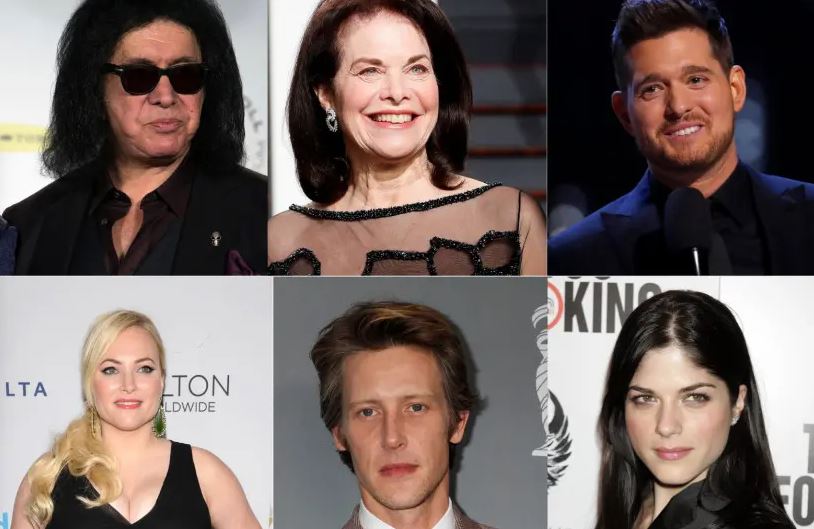
CCFP has worked with celebrities including Michael Bublé, Sherry Lansing, Gene Simmons, Meghan McCain and Selma Blair.

The organization is opposed to the ‘Boycott, Divestment and Sanctions’ movement that targets Israel, and was founded with the purpose of helping artists and performers with navigating appearances in Israel.

Diane Warren, Harvey Mason Jr., Post Malone’s Manager Among Honorees at Creative Community for Peace Fundraiser

By: Roy Trakin

On a cool, fall October night, the Creative Community for Peace (CCFP) held its third annual “Ambassadors of Peace” fundraising event to a backyard full of smiles. After taking a year off for the pandemic, the music industry came out in force to support the organization that has tried to counteract calls to boycott Israel by encouraging artists and creatives across entertainment to learn more about the region and performing in the country.

CCFP launched in 2018 with inaugural honorees Scooter Braun, then Geffen Records chief Neil Jacobson and Warner Music Group A&R executive Aton Ben-Horin. This year’s diverse crop of honorees included Recording Academy CEO Harvey Mason jr., hit songwriter Diane Warren, Sony Music Latin America, Spain & Portugal chairman/CEO Afo Verde, Columbia Records SVP A&R/Unrestricted President Ben Madahhi, Co-Star Entertainment president Traci Szymanski, and Electric Feel Entertainment founder/CEO Austin Rosen. (Watch Post Malone, a management client at Electric Feel, congratulate Rosen via video above.)

“Music is a powerful force for diplomacy,” said publishing vet David Renzer, co-founder of CCFP with EA’s Steve Schnur (the latter was not in attendance), revealing the evening will raise more than $300k for the organization. “We’re trying to use the arts to build those bridges, to remind ourselves of those commonalities and symbiotic relationships.”

The previous two sold-out events were held at the Hancock Park home of entertainment attorney Aaron Rosenberg and TV producer Danny Rose, and the home of lawyer Gary Stiffelman and wife Carmen, but this year’s edition was at the Beverly Hills residence of honoree Ben Madahhi’s parents, his father — a cardiology doctor at UCLA who fled Iran for the U.S. in 1975 — and mother beaming on the black carpet.

“This has a deep meaning to me because I grew up an Iranian-American Jew in Los Angeles, with both Muslim and Jewish friends,” said Ben Madahhi from the podium. “Music has the power to heal, to unite people and eliminate divisiveness. My parents raised me to have respect for people of all different backgrounds and cultures. My mission has always been to make records that uplift and unite people, have a positive impact.”

For honoree Diane Warren, the appeal of the organization was simple. “Any organization that is about peace and supports Israel, I’m good with,” said the award-winning songwriter. “Anti-Semitism always seems to rear its ugly head, and it seems more prevalent than ever.”

Ari Ingel, who quit practicing law to become director of CCFP, noted that, due to the pandemic, which had people glued to their computers, there was a rise in the kind of misinformation which fuels prejudice.

“We have a great deal of work to do,” insisted Ingel. “There are more people than ever spreading misinformation and outright lies. Our goal is to educate the industry and the public to counter those falsehoods.  Unfortunately, it’s far from being eradicated.”

The organization was founded against the backdrop of musicians like Roger Waters, formerly of Pink Floyd, advocating for the policy of BDS (which stands for boycott, divestment and sanctions), and Lana Del Rey pulling out of a scheduled festival performance there after much outside pressure.

“The last Gaza conflict between Israel and Hamas brought out a lot of haters,” said Ingel. “Events like this encourage an open discussion of the issues, and how we can use our voices to effect positive change.”

Austin Rosen, whose Electric Feel Entertainment represents management clients like Post Malone, 24KGoldn and Iann Dior — Dior showed up in support along with hitmakers Louis Bell, Billy Walsh and Blake Slatkin — is planning on opening a recording studio in Tel Aviv and promises his acts (like Post Malone) will tour there. “It’s all about awareness, making people understand it’s OK to play there,” offered the press-shy entrepreneur.

Lazy loaded image

Grammy chief Harvey Mason Jr., who was introduced by his Recording Academy colleague Jimmy Jam (pictured above) — almost unrecognizable after a 120-pound weight loss — said of the honor:

“For me, it’s bringing people together, coming from a place of peace and love,” said Mason jr., whose efforts to diversify his organization’s membership and making the Grammy voting process more transparent have not gone unnoticed. “Political and religious beliefs may be all over the map, but my goal is to be productive, make things better rather than dividing and separating us from one another.

“I sympathize with any group that’s been discriminated against or persecuted. I try to support unifying, not battling one another. The power of music can unite us in a time where it’s most needed.”

The individual speeches were preceded by a taped message of support from Clive Davis, then followed by musical performances from Columbia Records artist Clinton Kane, a singer-songwriter who played his hit “Chicken Tendies,” followed by Deborah Cox who delivered a pitch-perfect rendition of “Imagine” that fit the hopeful mood.

It was left to Jimmy Jam, admitting he was just glad to be around people again, to sum up the evening’s goals. “What’s important is music and community,” he told Variety. “Music heals, it’s the soundtrack to our lives. Music is uplifting, it’s a divine art. It just makes things a little better.

Pictured (from left): Austin Rosen, Afo Verde, Diane Warren, Harvey Mason Jr. and Ben Madahhi

Read the original article on Variety.com here.

Hollywood Stands Up Against Antisemitism After L.A. Restaurant Attack Being Investigated as Hate Crime

Elizabeth Wagmeister

May 20, 2021 8:30am PT

After an attack at a Los Angeles restaurant that is under investigation by the LAPD as a hate crime, Hollywood is speaking out against antisemitism.

Debra Messing, Mayim Bialik, Meghan McCain and Kim Kardashian are among the celebrities who have taken to social media, urging for peace and calm amid the alarming escalation of deadly violence between Israelis and Palestinians in the Gaza Strip and West Bank. The mounting toll of more than 200 casualties threatens to inflame the entire Middle East.

The tensions across the world have been reverberating in the U.S. through the rise in brutal and public antisemitic attacks against Jews.

“I’m speechless and devastated by the antisemitic attacks in my home city as well as the vandalism very close to my home targeting Jewish businesses in the past 24 hours,” Bialik, “The Big Bang Theory” and “Call Me Cat” star, tweeted on Wednesday. “I don’t even know what else to say,” she continued.

The assault occurred just before 10 p.m. on Tuesday night at a sushi restaurant in the Beverly Grove neighborhood, near the Beverly-Fairfax area of mid-City L.A. The LAPD has yet to make an arrest or release a motive.

Video of the attack shows individuals in a caravan of cars with Palestinian flags shouting “Fuck you” as they drove by the restaurant, Sushi Fumi, on La Cienega Blvd. In the footage, a group that reportedly numbered about 30 people, dressed mostly in black with face coverings, threw glass bottles at diners eating outside.

“They were cussing at Jews,” a man who was attacked told ABC 7, the ABC-owned affiliate in Los Angeles. The anonymous victim said after the hateful anti-Jewish rhetoric was shouted from the cars, the individuals from the caravan then got out of the cars and approached the sidewalk. At one point, a man who was being attacked defended himself by swinging a metal stanchion at the attackers, who continued to assault him, punching, kicking and throwing him against a car.

“I realized I had to take something to scare them,” said the anonymous victim, speaking to KABC-TV. “There were many girls behind us. I was scared that they would attack everybody.”

A separate witness at the scene told the L.A. Times that the attackers yelled, “Death to Jews” and “Free Palestine.”

In light of the attacks, Los Angeles Mayor Eric Garcetti announced the LAPD is investigating the ambush as a hate crime, saying on Twitter, “L.A. is a city of belonging, not of hate. There is simply no place for antisemitism, discrimination, or prejudice of any kind in Los Angeles. And we will never tolerate bigotry and violence in our communities.”

The L.A. incident is one of several antisemitic attacks that have been reported in the wake of the conflict. Also on Tuesday, Orange Delite & Grill, a kosher restaurant on Ventura Blvd. in Sherman Oaks, was vandalized and its front glass door was smashed. On Wednesday, footage of a New York City brawl outside of a bagel shop emerged on social media, with the NYPD trying to break up the fight.

“The vicious attacks on Jews we are seeing on the streets of America is pure Jew hatred and a direct result of the inflammatory rhetoric that is being pushed online. It should be condemned by everyone,” says Ari Ingel, director of Creative Community for Peace, an apolitical industry-backed nonprofit. “Both Israelis and Palestinians deserve to live in peace and safety, and attacking Jews in America is not going to help bring about the change we all so urgently desire.”

Earlier this week, CNN fired a freelance contributor, Adeel Raja, who tweeted pro-Holocaust messages, including one message that stated, “The world today needs a Hitler.” A CNN spokesperson confirmed cutting ties in a statement that read, “Adeel Raja has never been a CNN employee. As a freelancer, his reporting contributed to some news gathering efforts from Islamabad. However, in light of these abhorrent statements, he will not be working with CNN again in any capacity.” (Despite numerous antisemitic tweets, Raja’s Twitter account is still active.)

Antisemitic hate crimes have been on a steady uptick for years, globally and in the United States. According to the FBI, incidents related to religion increased 7% from 2018, with 1,521 total incidents reported. Some 63% of all reported religion-based hate crimes in 2019 were directed at Jews and Jewish institutions, making it the single largest category of hate crimes in the United States.

These most recent antisemitic attacks come as tensions are rising — and rapidly spreading across social media with misinformation from all ends — in response to the conflict in the Middle East.

Kim Kardashian, who has more than 222 million followers on Instagram, posted on her Instagram stories on Wednesday calling for peace in the Middle East. “I don’t know who needs to hear this, but both Palestinians and Israelis deserve to live in peace and safety,” Kardashian posted, re-sharing a statement originally posted by Jewish singer-songwriter and progressive Zionist activist Hilary Hawn, also known as HRH. “Anyone who tries to convince you that one must come at the expense of the other does not support human rights for all humans.”

Comedian Sarah Silverman, whose sister Susan Silverman is a rabbi in Jerusalem, reacted to the L.A. attack, urging her 12.4 million Twitter followers to separate the Jewish people from Israel, tweeting, in part: “Jews in the diaspora need allies.” But Silverman’s post drew ire from many Jews on Twitter who called the post itself antisemitic, namely the part where Silverman opines, “We are not Israel.”

Writer, comedian and influencer Erin Foster also posted on her Instagram stories, noting that her friend was at the scene, taking videos of the attack, while seated at the sushi restaurant. “If you learned about this conflict a week ago and think it’s harmless to post pro-Palestine without learning more, you should know it’s harmful. Peace is the thing you should be promoting,” Foster wrote. “I’m Jewish and I go to this sushi restaurant every week. A caravan of pro-Palestine people drove by and screamed ‘Who’s Jewish?’ Then got out and beat the shit out of people.”

Also in response to the Sushi Fumi attack, actor Michael Rapaport issued a clarion call to “social justice friends.”

“Why aren’t Jews included in your activism?” Rapaport posted on Instagram.

“There is so much disinformation about Israel being spread and it is getting people hurt,” said “Will & Grace” star Debra Messing, who posted a long thread on social media. She wrote, in part, “There are videos from all over the world, including the U.S., of crowds of pro-Palestinian protesters attacking, beating, kicking, using pipes as weapons against Jews. It’s horrifying. Attacks against Jews has increased 483% in the last 10 days. 86 attacks. Hamas is a terrorist organization whose sole purpose is to kill every Jew and destroy Israel. Most people living in Israel want peace.”

The Anti-Defamation League, the New York-based international anti-hate organization, is offering a $5,000 reward for information that leads to the attackers involved in the Sushi Fumi incident.

Read the entire article here.

More Than 125 Entertainment Professionals Sign Open Letter Urging Peace in Middle East

By: Malina Saval

As tensions continue to flare in the Middle East, Creative Community for Peace,  an apolitical, non-profit entertainment industry organization, has come together to issue a collective call for “peace, balanced discourse and an end to inflammatory one-sided accounts” of the conflict between Israel and Palestinian Territories. This divisive rhetoric, notes the org, serves only to foment an already incendiary crisis that has, this past week alone, claimed more than 200 lives.

Creative Community for Peace was founded in 2012 by David Renzer, former chairman/CEO of Universal Music Publishing, and Steve Schnur, worldwide executive & Music President, Electronic Arts.

More than 125 leaders in the entertainment industry,  including KISS  frontman Gene Simmons, Grammy Award-winning artist Michael Bublé, Haim Saban, chairman & CEO, Saban Capital Group, and songwriter-producer Diane Warren, signed the Creative Community for Peace-endorsed open letter, which urges peace in the Middle East and implores fellow members of the entertainment industry to use their celebrity platforms to encourage productive, fact-based discourse, with peace as the main objective. The open letter also acknowledges the pain and loss impacting all parties involved in the conflict.

“I pray for peace,” says Saban, who was born in Alexandria, Egypt and moved with his family to Tel Aviv, Israel when he was 12.

“There has to be a way to sit down and talk through differences,” says Simmons, who was born in Haifa, in northern Israel, and emigrated with his family to the States at the age of eight.

“I pray for peace. For all.”

The joint statement from the Creative Community for Peace comes amid a surge of violence in Israel and the Palestinian Territories, including indiscriminate rocket attacks targeting metropolitan areas throughout Israel, as well as Israel’s retaliatory response in Gaza. Hamas, a militant Palestinian Islamic organization that has controlled the Gaza Strip since Israel unilaterally withdrew from the territory in 2005, has launched more than 2,000 rockets into Israel, including Islamic holy sites in Jerusalem. On May 15, an Israeli air raid flattened a 12-story tower that served as a Hamas stronghold. The building, located in Gaza City, also housed offices belonging to Qatar-based broadcaster Al Jazeera and the U.S.-based Associated Press.

Friction between Israel and Palestine has also mounted over an Israeli court order to evict Palestinian residents from the neighborhood of Sheik Jarrah in East Jerusalem. That order is currently awaiting an appeal in Israel’s Supreme Court.

A flurry of anti-Israel memes and posts have since erupted on Twitter, Facebook and Instagram, with Israeli actor Gal Gadot skewered on social media after posting a statement calling for peace.

“My heart breaks. My country is at war,” Gadot posted on Twitter. “I worry for my family, my friends. I worry for my people. This is a vicious cycle that has been going on for far too long. Israel deserves to live as a free and safe nation. Our neighbors deserve the same. I pray for the victims and their families, I pray for this unimaginable hostility to end, I pray for our leaders to find the solution so we could live side by side in peace. I pray for better days.”

Gabriella Geisinger, Deputy Movies Editor at Digital Spy, called Gadot’s post “harmful.” Writer and activist Aaron Vallely commented that “Gal Gadot’s statement is far worse than that tone-deaf ‘Imagine’ video from last year.”

This vitriol, says Ari Ingel, an entertainment attorney and director of Creative Community for Peace, serves only to “increase the animosity and hatred, which unfortunately, has real life consequences.”

“Misinformation that is being spread online and then amplified by social media influencers, influencers with no real knowledge of what is happening, is only working to inflame the situation, instead of working to de-escalate it and work through some sort of resolution to the situation,” Ingel continues. “The misleading and fallacious memes that are being posted from people that have no real concept of what is happening there and are not experts on the conflict are just making a horrible situation far worse.”

The open letter, notes Ingel, is also to inform the public that “Hamas is playing a leading role in this violence.”

“While we may have differing views on whether the evictions are legitimate or not legitimate, that doesn’t take away from Hamas firing these missiles indiscriminately at civilian populations in Israel, which affects Arabs and Jews,” says Ingel. “People need to call on [Hamas] to stop firing missiles and stop inflaming the situation.”

Along with Gadot, Ingel also highlights entertainment figures such as Rihanna, who wrote on her Instagram page that she “stand[s] with humanity,” and DJ Khaled, who issued a call for “love and light and prayers.”

“I think we need to elevate the voices of people like Rihanna, who are calling for an end to the violence and not choosing sides,” says Ingel. “That is really what entertainers should be doing. Because it’s horrible that both Israelis and Palestinians are suffering. We need to de-escalate this violence as soon as possible.”

The Creative Community for Peace open letter is as follows:

“We are deeply concerned by the escalating violence in Israel and the Palestinian Territories. The loss of life and violence is heartbreaking. We call on the leaders of all parties to end the violence, urge calm, and work toward de-escalation.

“We also call on our colleagues and friends in the entertainment community to stop posting misinformation and one-sided narratives that only work to inflame the conflict instead of bringing about peace.

“While we may have differing opinions on the conflict, it is never okay for Hamas to publicly call for the killing of civilians, use civilians as human shields, and rain down missiles indiscriminately on civilian populations with no care about who is killed—Arab or Jew.

“When lives are at stake, we all bear responsibility to unite rather than divide. Incendiary language only benefits those at the extremes who have no interest in peace. Our thoughts are with all Israelis and Palestinians who are experiencing unfathomable levels of fear and violence, and hope for the day when both peoples can live side by side in peace.” 

The signatories to the open letter include: Gene Simmons; Meghan McCain (co-host, “The View”); Haim Saban;  Sherry Lansing (former CEO of Paramount Pictures); Orly Agai Marley (president, Tuff Gong Worldwide); David Draiman (frontman, Disturbed); Noa Tishby (author, producer, actor); Selma Blair; Michael Buble; Diane Warren; Ben Silverman (chairman and co-chief executive officer of Propagate Content); Steve Schnur; Michael Rotenberg (partner, 3 Arts Entertainment); Mitchell Gossett (Industry Entertainment Partners); Andrew Gould (EVP Music Publishing, Roc Nation); Emmanuelle Chriqui (actress, activist); David Byrnes (partner at Ziffren, Brittenham, LLP); eve Barlow (music journalist); Aton Ben-Horin (global vice president of A&R for Warner Music Group); Kosha Dillz (artist, rapper); Amanda Kogan (agent, The Gersh Agency); David Renzer; Traci Szymanski (president, Co-Star Entertainment); Matisyahu (musician); Adam Taylor (president, APM Music); and Jordan Frazes (founder FRAZES CREATIVE).

A complete list of signatories can be found here: https://www.creativecommunityforpeace.com/blog/2021/05/14/open-letter-on-the-middle-east-situation/

Read the original article here.

Over 130 celebs call on influencers to stop Gaza violence misinformation

“We call on our colleagues & friends in the entertainment community to stop posting misinformation & one-sided narratives that only work to inflame the conflict instead of bringing about peace.”

By SARAH CHEMLA MAY 18, 2021 13:50

As tensions in the Middle East continue after more than a week of escalating violence, more than 130 leaders from the entertainment industry gathered by the organization Creative Community for Peace signed an open letter calling for “peace, balanced discourse and an end to inflammatory one-sided accounts” of the conflict between Israel and the Palestinian territories.
Creative Community for Peace (CCFP), an apolitical, non-profit entertainment industry organization, was founded in 2012 by David Renzer, former chairman and CEO of Universal Music Publishing, and Steve Schnur, worldwide executive & music president, Electronic Arts.
The first-of-its-kind open letter calling for peace urged entertainment community leaders to use their voice, influence and platforms to “call for the de-escalation of violence and the end to divisive rhetoric while also acknowledging the pain and loss impacting all parties involved in the conflict.”
This divisive rhetoric, stated the organization, serves only to foment an already incendiary crisis that has, this past week alone, claimed more than 200 lives.
The joint statement was signed by Michael Bublé, Sherry Lansing, Gene Simmons, Meghan McCain, Selma Blair, Emmanuelle Chriqui, Haim Saban, Diane Warren, Orly Agai Marley, David Draiman, Ben Silverman and Matisyahu, among many others. The open letter was made public on Friday.
“I pray for peace,” said Saban, who was born in Alexandria, Egypt, and moved with his family to Tel Aviv when he was 12.
“There has to be a way to sit down and talk through differences,” said Simmons, who was born in Haifa, in northern Israel, and emigrated with his family to the states at the age of eight. “I pray for peace. For all.”
“We are deeply concerned by the escalating violence in Israel and the Palestinian Territories,” the letter read. “The loss of life and violence is heartbreaking. We call on the leaders of all parties to end the violence, urge calm, and work toward de-escalation.”
“WE ALSO call on our colleagues and friends in the entertainment community to stop posting misinformation and one-sided narratives that only work to inflame the conflict instead of bringing about peace,” the statement continued.

“Misinformation that is being spread online and then amplified by social media influencers, influencers with no real knowledge of what is happening, is only working to inflame the situation, instead of working to de-escalate it and work through some sort of resolution to the situation,” CCFP director Ari Ingel said.

“The misleading and fallacious memes that are being posted from people that have no real concept of what is happening there and are not experts on the conflict are just making a horrible situation far worse,” he said.

“The open letter is also to inform the public that Hamas is playing a leading role in this violence,” Ingel said.

“While we may have differing views on whether the evictions are legitimate or not legitimate, that doesn’t take away from Hamas firing these missiles indiscriminately at civilian populations in Israel, which affects Arabs and Jews,” the director said. “People need to call on [Hamas] to stop firing missiles and stop inflaming the situation.”

Last Wednesday, Gal Gadot released a carefully worded statement on her social media accounts decrying the war and violence, using rather generic language and not assigning blame. However, her words ignited a backlash and she disabled comments on her Instagram and Twitter accounts.

Her statement read: “My heart breaks. My country is at war. I worry for my family, my friends. I worry for my people. This is a vicious cycle that has been going on for far too long. Israel deserves to live as a free, safe nation. Our neighbors deserve the same. I pray for the victims and their families, I pray for this unimaginable hostility to end, I pray for our leaders to find the solution so we could live side by side in peace. I pray for better days.”

Her words received a great deal of attention. The Pnai Plus entertainment website headlined an article about the controversy: “‘Wonder Woman wake up!’ How Gal Gadot became a public enemy,” among many others who criticized the superstar.
Hannah Brown contributed to this report.
Read the original article here.

NEW INITIATIVE FROM CREATIVE COMMUNITY FOR PEACE Helps Tackle Anti-Semitic Content on Entertainment Platforms

Digital services like TikTok, Spotify, SoundCloud and YouTube must continue to work to safeguard their sites, given the role they play in shaping young minds and influencing public opinion.

By Ari Ingel & Karys R. Oschin


In this time of social distancing and sheltering-in-place, people all over the world are spending more time on streaming sites than ever before. However, as users go digging for content to fill their time, they are also coming across an increasing amount of antisemitic content. Unfortunately, streaming services such as TikTok, Facebook, Spotify, and YouTube are struggling to implement and adequately enforce their own incitement policies on hate speech and violence.

In response to this, Creative Community for Peace has created a new Digital Taskforce to tackle this problem. We have been working with the Trust and Safety or Security Departments at these companies and have been directly responsible for removing hundreds of antisemitic videos, songs, and playlists, in addition to having an active ongoing dialogue resulting in new procedures and initiatives by these services as well.

TikTok, the explosively popular video-sharing social networking app geared towards children and teenagers, is the latest in a string of online platforms that have recently been found to be hosting troves of antisemitic content. The app, which allows users to upload minute-long videos to share with their friends, has also been hosting videos that encourage violence against Jews.

Examples of the antisemitic content on TikTok include a video that praised Middle East culture for creating “dread for the Jews” and “blows and slaughter on land and sea.” There was also an animated re-enactment of a series of four real-life terrorist attacks against Israelis. The clips included a 2015 stabbing that left two Israeli civilians dead and two injured, including a 2-year-old child, and a 2016 drive-by shooting that killed two. This graphic video depicted bullet wounds, knives slicing throats of religious Jews, and pedestrians run over by cars careening through the air.

Both of these videos have now been removed, along with hundreds of others that included anti-Jewish jokes, genocidal threats, and dehumanizing characterizations of Jews from across the political and religious spectrum, and throughout the world.

Similarly, Spotify was recently found to have many user-generated playlists that praised Hitler, called for the gassing of Jews, denial of the Holocaust, and featured profile photos of swastikas and Hitler. Examples of some of the offending playlists included: “Gas the Jews,” “Anne Frank Bash 2012 (Ima Jew),” “Anne Frank’s Gassing Up,” “Hitler’s Sexy Mixtape,” and “Hitler Did Nothing Wrong.” Many of these playlists are accompanied by odious images that mock Holocaust victims and push classic Jewish conspiracy theories.

Thankfully, Spotify has displayed an openness and eagerness to learn more about this problem and has been proactive about working with us. We have reported over 250 playlists with hateful titles or imagery in the last six months, and nearly all have been taken down.

One of the most challenging platforms to police is YouTube, which operates under the protection of the Digital Millennium Copyright act. This act effectively places the responsibility of policing on the users, who must notify YouTube of hate speech or copyright-infringing materials. Recently, copyright holders have made an effort to amend this law, with the feeling that YouTube should take more responsibility for problematic content.

However, despite a June 2019 YouTube policy that updated hate speech prohibitions to include ideologies such as White Supremacy and Holocaust denial, recently a report detailed over twenty-one hate-filled channels on You Tube.

YouTube, and other digital streaming sites, such as SoundCloud, also host dozens of antisemitic artists, songs, and playlists, particularly within the National Socialist Black Metal (NSBM) genre. This inflammatory genre pushes classic Neo-Nazi propaganda and Jewish conspiracy theories. We have worked with both sites to remove this hateful material.

CCFP was also responsible for YouTube’s removal of Louis Farrakhan’s Fourth of July Criterion speech from the Nation of Islam YouTube channel that was littered with outrageously antisemitic statements, and we helped pull the plug on a recent live webinar featuring PFLP terrorist and convicted plane hijacker, Leila Khaled.

Walking the line between hate speech and censorship is never easy. However, the glorification of terror, encouraging violence, and promoting antisemitism are clearly in violation of TikTok, Spotify, SoundCloud, and YouTube’s community standards. Given these platforms’ reach, these digital services have to continue to work hard to safeguard their sites, given the role they play in shaping young minds and influencing public opinion.


Read the article on JNS.org here.

BDS Anti-Normalization Bent on Silencing Arab Voices

By Ari Ingel & Karys R. Oschin


On social media, Emiratis, Bahrainis and Israelis are reaching out to one another in celebration of the historic Abraham Accord, which has normalized informal relations between Israel and the two countries. State leaders, cultural figures, and private citizens are already extending invitations to visit each other and discussing possible ways to collaborate. The overwhelming majority of countries in the world have welcomed this breakthrough, which offers optimistic hope for peace and prosperity in the region.

Predictably, the Boycott, Divest, and Sanctions (BDS) movement, which aims to isolate Israel economically, culturally, and geopolitically, is singing a different tune.

The movement’s core principle of “anti-normalization” works to restrict any interaction between Israelis and Arabs, and considers any form of cooperation treasonous.  “Strongly condemning” the Abraham Accord, the BDS movement is now calling for a full boycott of UAE sponsored activities, festivals, and projects.

The official BDS movement website defines normalization as “the participation in any project, initiative or activity, in Palestine or internationally, that aims (implicitly or explicitly) to bring together Palestinians (and/or Arabs) and Israelis (people or institutions) without placing as its goal resistance to and exposure of the Israeli occupation.”

The BDS charter explicitly rejects “co-existence” between Arabs and Israeli Jews and instead preaches  “co-resistance,” an ideology that even excludes “cooperating with the leftist Zionists who take part in demonstrations or call themselves peace activists.” “Dialogue,” “healing,” and “reconciliation” are all considered forms of normalization, and thus censured by the BDS movement.

Consequently, Arabs and Israelis who choose to enjoy a cup of coffee together, or attend a sporting event or a concert, are fair game to be targeted and publicly shamed by BDS proponents. They harass, bully, intimidate, silence, and violently threaten ordinary citizens and public figures who dare interact with Israeli Jews.

Sadly, the greatest victims of anti-normalization are Palestinians themselves, who are prevented from exercising free speech, artistic freedom, and earning a livelihood.

The movement’s current target is the hugely popular Palestinian Arab-Israeli video blogger, Nuseir Yassin, who runs the social media site Nas Daily.

Yassin recently launched “The Next Nas Daily“, an initiative to mentor 80 Arabs in filmmaking, including providing full educational and financial support to all programs participants. A promotional video for the program states that its purpose is to cultivate Arab content creators and give more young Arabs a public voice.

Instead of supporting such a fantastic initiative, the BDS movement has called for a boycott of Nas Daily because Yassin is “steeped in normalization,” the program promotes coexistence, includes an Israeli-Jew as one of the program’s teachers, and is partially funded by the Emirati “New Media” academy.

Unfortunately, this episode is not unique.

This past month, an 11-year-old Palestinian boy posted a video of himself rapping, which went viral on social media. In a subsequent interview, the boy declared that he “would like to spread love between us [Palestinians] and Israel.”

The child’s innocent aspirations towards peace engendered severe criticism. He was subjected to a vicious bullying campaign from BDS activists, amongst others, who denounced him for promoting “normalization” with Israel. The interview was taken down under pressure, and the boy’s father disavowed his son’s comments.

Last April, BDS activist and former Amnesty International researcher, Hind Khoundary, alerted Hamas officials in Gaza to a Zoom meeting between Palestinian peace activist Rami Aman and Israeli peace activists. The Zoom event was designed for the two sides to share experiences of living through a pandemic. Mr. Aman was arrested shortly thereafter and has not been heard from since.

Ms. Khoundary justified her actions based on her opposition to normalization: “No form of joint activity, cooperation, or dialogue with Israelis is acceptable, even engaging with Israeli ‘Peace Activists,” she wrote on Twitter.

Ironically, the BDS movement is engaged in the very type of oppressive measures that they accuse Israelis of, fundamentally opposed to pluralism and the free exchange of ideas.

When two prominent Palestinian software companies were invited to Bir Zeit University near Ramallah to help secure jobs for Palestinian students, they were forced off campus amidst BDS rioters chanting “normalization is treason.” The reason? These software firms had previously worked with Israeli tech companies.

Similarly, Palestinian teenage girls who attended a co-existence summer camp with Israeli girls in the U.S. were victims of verbal abuse from the BDS community. Vilified as “traitors” and “prostitutes,” many Palestinians left the camp out of fear. The BDS movement also demanded that the European Union cancel a co-existence event in Belgium with young Israelis and Palestinians, prompting many participants to withdraw.

Meanwhile, the Palestinian Campaign for the Academic & Cultural Boycott of Israel (PACBI), which serves as the boycott movement’s leading cultural arm, targets artists and athletes who intend to visit or play in Israel. Over the years, several artists, including Lauryn Hill and Lana Del Rey, have attempted to perform in venues in both Israel and the West Bank and have been rebuffed by Palestinian venues due to pressure from BDS anti-normalization activists. When recording artist Aurora recently announced her intention of performing in the West Bank after two sold-out shows in Israel, PACBI explicitly rejected this possibility on Twitter, arguing that any performance in Israel normalizes it as a legitimate country.

Last year, when Jordanian singer Aziz Marka performed in the Israeli Arab town of Kafr Yasif to nearly 5,000 fans, he was the victim of a demonization campaign by BDS proponents, who ignored the outpouring of support and gratitude from his fans, most of whom were Arab.

“BDS people,” said Marka at that time, “have an interest in keeping me – and us, the artists – paralyzed and intimidated…I’m not willing to be dictated to about what to believe and who to talk against.”

Instead of sowing the seeds of division, those interested in securing  peace between Israel and the Palestinians would do well to support coexistence organizations, such as those who use the arts and culture to bring the two sides together, including the West-Eastern Divan Orchestra, the Polyphony Foundation, and the Jerusalem Youth Chorus.

As more and more Arab states abandon their decades long policy of anti-normalization with Israel, the Bahrain and Emirati normalization deals are laying bare what many of us who have monitored the BDS movement have always known: their goal is the elimination of the State of Israel, not coexistence between the region’s Jews and Arabs.

Those seeking a peaceful resolution to the Israeli-Palestinian conflict would best be served by casting BDS from the mainstream into the radical fringe where it belongs, and instead support coexistence organizations, such Creative Community For Peace (and others such as West-Eastern Divan Orchestra, the Polyphony Foundation, and the Jerusalem Youth Chorus)  who are dedicated to promoting the arts as a bridge to peace.

Perhaps now the world will finally see the leaders of the BDS movement for what they are: extremist idealogues who have always been anti-peace.

You can also read this article here on JPost.

X